Why this matters more than you think
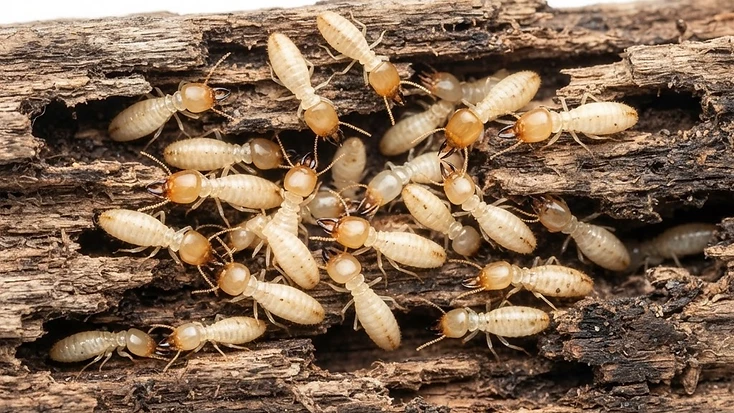
Termite alates (winged reproductives) and flying ants look similar at a glance — both are dark-bodied insects with two pairs of wings that swarm in warm, humid weather. But the difference is critical: flying ants are a nuisance; flying termites mean a mature termite colony is within 100 metres of your home and is actively producing new colonies. If you see winged termites swarming near your house, you need an inspection — not next month, this week.
The three key differences
You can tell termites and flying ants apart by examining three body features. If you can catch one or photograph it clearly, these differences are visible to the naked eye.
- Wings — Termite wings are equal in length and much longer than the body. Flying ant wings are unequal in length (front pair longer than rear) and roughly body length.
- Body shape — Termites have a straight, uniform body with no visible waist. Flying ants have a pinched waist between the thorax and abdomen.
- Antennae — Termite antennae are straight and bead-like. Flying ant antennae are elbowed (bent).
Behavioural differences
- Termites swarm in the late afternoon or evening on hot, humid days, often before or after rain
- Flying ants can swarm at any time of day and are attracted to lights
- Termite alates shed their wings quickly after landing — piles of discarded wings on windowsills or floors are a strong termite indicator
- Flying ants retain their wings longer and are more likely to be seen flying around lights
What to do if you see swarming insects
- 1Don't panic — but don't ignore it either
- 2Try to capture one or take a clear photo for identification
- 3Look for discarded wings on windowsills, floors and cobwebs
- 4Check for mud tubes on foundations, piers or walls — a definitive termite sign
- 5Book a professional termite inspection — even if they turn out to be flying ants, the peace of mind is worth it
Discarded wings found inside your home are a serious warning sign. It means termites have swarmed from a colony inside or immediately adjacent to your house. Contact a licensed pest controller immediately.