
Why termite barriers matter
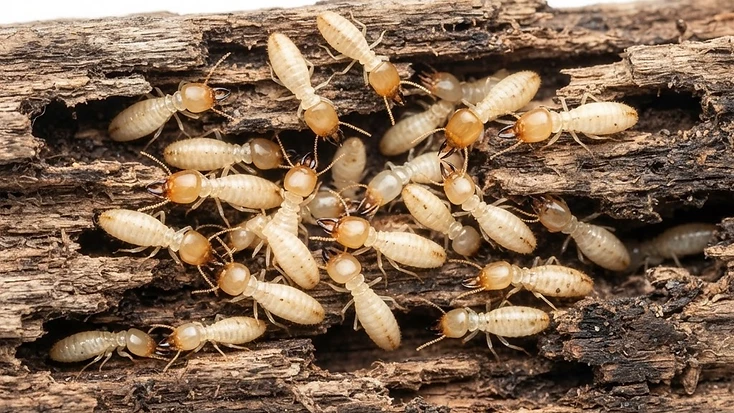
The entire Hunter region is classified as a high termite risk zone. The National Construction Code (NCC) requires new homes and major renovations to include a termite management system — either a physical barrier, a chemical barrier, or a combination. Australian Standard AS 3660.1 sets out the design and installation requirements. A barrier doesn't make a home termite-proof; it makes termite entry visible and forces termites to expose themselves, so annual inspections can catch activity before damage occurs.
Physical barriers
Physical barriers block termite entry or force termites to build visible mud tubes over them. They're installed during construction and last the life of the building.
- Stainless steel mesh — a fine mesh too hard for termites to chew through, installed under the slab and around penetrations
- Granite aggregate — graded stone particles too large for termites to move and too tightly packed to travel through, placed under the slab
- Termite shields (ant caps) — metal sheeting installed on piers and stumps that forces termites to build visible mud tubes over the edge
- Slab design — a properly constructed concrete slab with sealed penetrations acts as a barrier, with exposed slab edge for inspection
Pros: long-lasting, no chemical replenishment, no environmental residue. Cons: can be breached if the building envelope is damaged by renovations, landscaping or settlement, and they only work if inspection access is maintained.
Chemical barriers
Chemical barriers treat the soil under and around the slab with a termiticide that either repels or kills termites. They're applied during construction (under-slab treatment) or retrofitted to existing homes by trenching and rodding around the foundations, or via a reticulation system of pipes that allows replenishment without re-trenching.
- Repellent termiticides — termites avoid the treated zone
- Non-repellent termiticides — termites pass through, pick up the active ingredient and transfer it to the colony
- Reticulation systems — pipework installed under the slab or around the perimeter for easy replenishment
Pros: flexible, can be retrofitted to existing homes, and non-repellent products can reduce colony pressure. Cons: the active ingredient degrades over time and needs replenishment — typically every 5–8 years depending on the product and soil conditions.
| Feature | Physical barrier | Chemical barrier |
|---|---|---|
| Lifespan | Life of building | 5–8 years (replenish) |
| Retrofit to existing home | No | Yes |
| Maintenance | None | Replenishment |
| Best for | New builds | Existing & new homes |
| Annual inspection still needed | Yes | Yes |
Chemical vs physical termite barriers compared.
Which is right for your home?
For new builds, the choice is often driven by construction type, soil and budget, and many homes use a combination — a physical barrier under the slab with a chemical perimeter zone. For existing homes, a chemical barrier or reticulation system is usually the practical option, since physical barriers can't be retrofitted under an existing slab. Your builder and pest controller can advise on the right system for your construction type and the Hunter's soil conditions.
A termite barrier reduces risk — it doesn't eliminate it. Barriers can be breached by renovations, landscaping, settlement or simply degrade over time. Annual termite inspections remain essential for every Hunter region home, regardless of the barrier installed.