
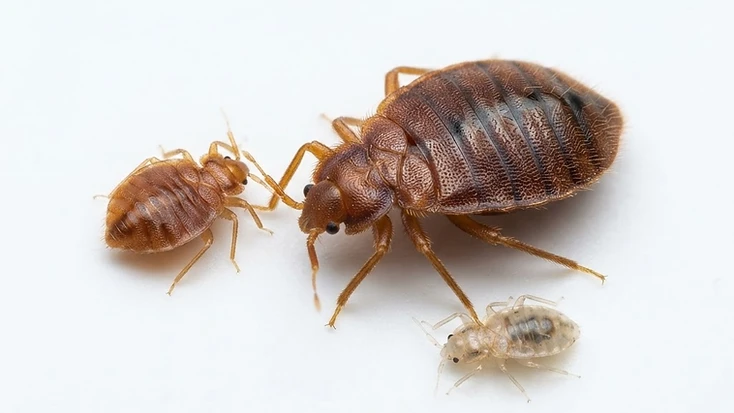
Why bed bugs are so difficult
Bed bugs are expert hitchhikers. They travel in luggage, second-hand furniture and clothing, and they've made a strong comeback in Newcastle and the Hunter alongside rising domestic travel. They hide in mattress seams, bed frames, skirting boards and even electrical outlets — anywhere within a few metres of a sleeping human. They can survive months without feeding and are resistant to many over-the-counter products, which is why professional treatment, combined with thorough preparation, is the only reliable solution.
Before the technician arrives
- 1Strip all bedding and launder it on the hottest wash cycle, then hot dry for at least 30 minutes — heat kills all bed bug life stages
- 2Bag laundered bedding in sealed plastic bags so bed bugs can't re-infest clean items
- 3Remove clutter from bedrooms — bed bugs thrive in clutter where sprays can't reach
- 4Vacuum floors, mattress and bed frame thoroughly, then empty the vacuum outside into a sealed bag
- 5Pull the bed 10–15cm away from the wall so the technician can treat the frame and surrounds
- 6Do not move furniture or bedding from the infested room to other rooms — this spreads the infestation
- 7Do not use fly spray or bug bombs before treatment — they scatter bed bugs and make professional treatment harder
What the treatment involves
Bed bug treatment is intensive and almost always requires more than one visit. A professional treatment combines targeted chemical application to mattress seams, bed frames, skirting boards, carpet edges and cracks and crevices, with a follow-up 2–4 weeks later to catch nymphs that hatched from eggs surviving the first treatment. Heat and steam may be used on sensitive areas. The technician will also advise on mattress encasements and ongoing monitoring.
After treatment
- 1Keep sleeping in the bed — moving rooms spreads bed bugs and denies the treatment its target
- 2Monitor for activity using interceptors under bed legs and by checking sheets for blood spots
- 3Book the follow-up treatment at the recommended interval — skipping it is the most common reason treatments fail
- 4Avoid reintroducing bed bugs: inspect luggage after travel, check second-hand furniture before bringing it inside, and keep mattress encasements in place
One treatment rarely eliminates a bed bug infestation. Eggs survive the first treatment and hatch 1–2 weeks later. The follow-up visit is not optional — it's the difference between a resolved infestation and a recurring one.